
When you hunt on a deer ranch in Texas, there really aren’t too many unexpected creatures that might wander up to the feeder.
You’ve got your whitetail deer, of course. A small herd of wild hogs might bowl through the bushes and massacre the corn at the feeder. You could also be visited by a handful of sneaky little raccoons, or gobbling wild turkeys. In a rare moment, a spotted bobcat might even saunter past your stand. The coyotes may not show themselves, but you wouldn’t surprised to hear them barking at each other in the shelter of the thick mesquite trees.
But an Axis deer? Or a nilgai? A big spotted deer or giant, dark grey elk-looking animal with tiny horns probably wouldn’t be on your radar.
And yet… these exotics are slowly making their place in the South Texas ecosystem.
We’ve encountered just a handful of axis deer while deer hunting, and it’s truly amazing how foreign they seemed grazing on the same corn as the whitetail around them. Next week, my husband and I will (hopefully!) have the unique opportunity to see them and the other honorary Texan exotics in their original habitat in India!
Don’t mind me, just nerding out about large game animals over here…
So before our trip, I thought it would be neat to look into the three common native Indian species that have found a new home in my home, Texas.
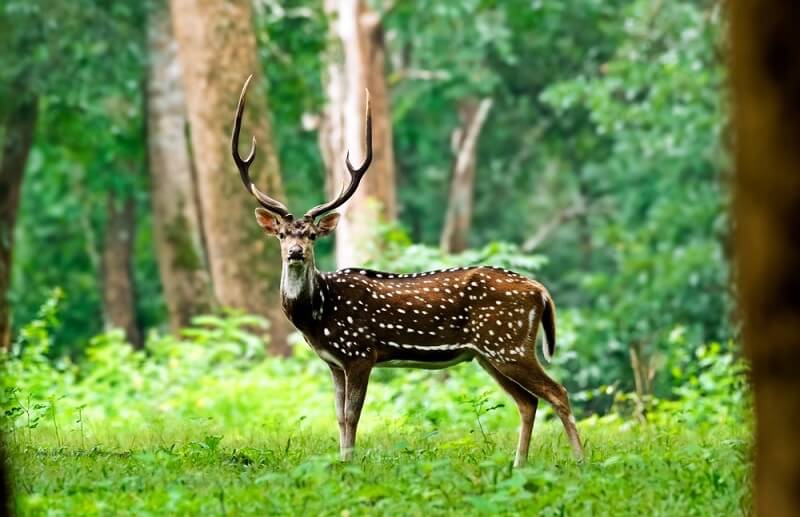
Axis Deer
Ever since I got into hunting, I have dreamed of someday harvesting an axis deer. With their unusual antlers, smattering of white spots, and chestnut coloring, they are truly a unique animal to behold in North America! They’re native to India, Nepal, and Sri Lanka and were originally brought to Texas in the 1930’s as a new game meat. Since then, small groups have escaped captivity and established themselves in the warm wilds of Texas, particularly in the Hill Country and South!
There is no exact rutting season for axis deer, so you’ll see many bucks in different stages throughout the year; some in velvet, some antlerless, and others ready to go! I can also say from experience that axis deer meat tastes slightly different from our native whitetail venison… dare I say… better?
Since they’re considered an exotic, you can hunt them year round at any game ranch with a population on their property; there are many reputable ranches scattered throughout Texas if you’d like to see one up close!
Nilgai
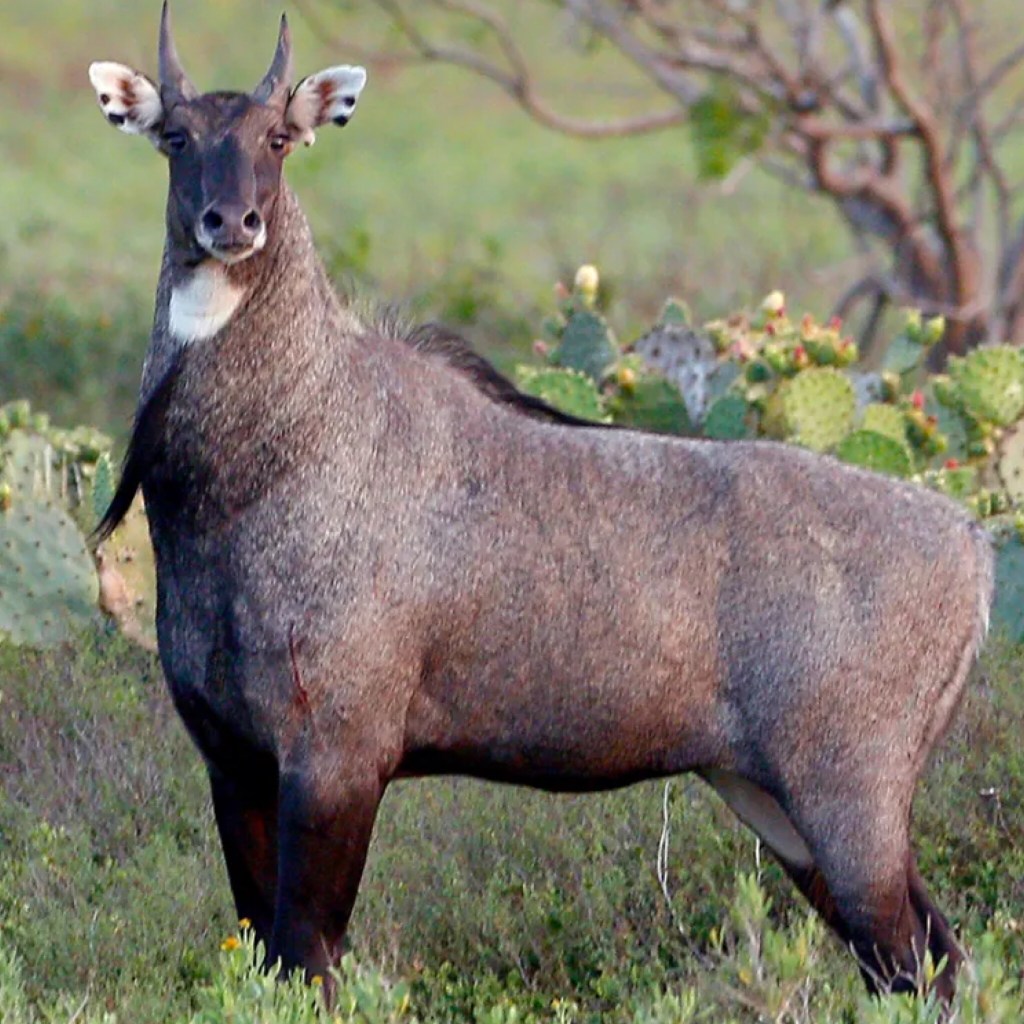
Most people can’t agree on how to pronounce this one… but we can all agree that they’re incredible animals to behold. A strange cross between an elk and a horse, they tower over the softly waving grasses of Coastal South Texas like otherworldly creatures. The bulls will range from a chestnut brown to a nearly blue-grey hue as they age (they’re affectionately known as “blue bulls”!). Despite their imposing size, they have small horns and flash unusual markings and stripes on their hides. They were also brought to Texas in the 1930’s to the King Ranch along the coast, where they quickly acclimated to the humid weather.
Like the axis deer, they’re considered an exotic in Texas and can easily be found on game ranches in the southern part of the state. Come check out one of the most unique large game animals you’ll find in North America!
Blackbuck
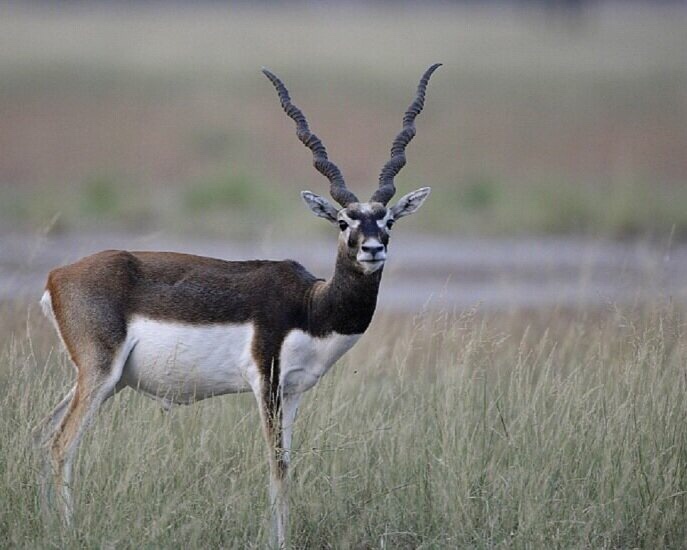
Of all the exotic species you might see while driving past the numerous high fence ranches in our area, this was the first one I’ve ever seen in person! Almost every time we make the short trek to the family ranch, we pass a high fence on the way with a front yard full of blackbuck. It’s typically an all ladies’ party, but we’ve seen a wildly horned buck a time or two, as well. It was one of the first moments that exotics truly captured my imagination.
Though not as common, another native Indian species on game ranches throughout South Texas is the Blackbuck! Original to India and Pakistan, they were released in the 1930’s on the Edwards Plateau as an alternative game animal. This animal definitely looks like it non-native with its curling horns and tiny, compact body. The bucks are black in color while the does sport a brighter shade of copper.
Like other exotics in Texas, they don’t breed during a specific time of year and can be hunted year round on game ranches, especially in the Edwards Plateau region!
If you’ve read this far, you’ve probably noticed a common trait between these three animals; they’re typically found on private ranches with plenty of opportunities to hunt them year round. So if you find yourself a little bit curious about axis deer, nilgai, blackbuck, or any other number of exotic animals that have found their way into Texas, you might need to take a little visit to our great state and check it out for yourself!
As for me and my husband, we are so excited to travel to India to see them in their true native habitat, where the only shooting that will be done is with my iPhone 8 camera.
References
Axis Deer: http://www.tsusinvasives.org/home/database/axis-axis
Nilgai: https://www.wildlifesystems.com/nilgai-antelope.html
 Jess and the Outdoors