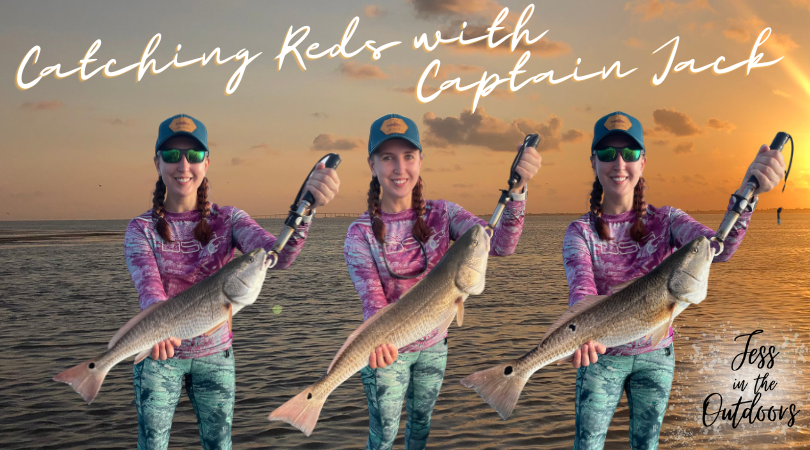
The sun was just rising over the water as we pulled up to our spot. Saharan Dust left a film in the air, as if we were looking around through foggy lenses. A small breeze was all that stirred the shallow water around us and the heat of the day felt far away.
My father-in-law, Captain Jack, had invited me to go fishing today for some red fish in his super secret spot and I was excited to get back on the water. Of all the saltwater inshore fish, red fish (or red drum) are some of the most prized for their size, fight, and flaky fillets.
But catching these golden beauties is easier said than done.
Their smaller and slightly more aggressive inshore neighbor, speckled trout, will go after all kinds of bait; shrimp, croaker, artificials, you name it! As if they know they’re highly sought after, the reds tend to be a bit pickier.
After all, why chase a shrimp under a popping cork when you’ve got tiny blue crabs waiting in the sand pockets for you?
Rocking the Mullet
In the early summer, one of the most effective ways to catch red fish is using cut mullet. You can buy mullet from most bait shops and simply cut it up into chunks. It’s economical because you can use the same piece of bait multiple times, even if you catch a fish! (I caught two on the same piece of bait today!)

As we slowed to a stop on the water, Captain Jack bypassed the fishing rods behind us for a cast net instead. Because fresh bait is always best, why not catch our own?
With the rising sun and clear water, we were easily able to see the small schools of mullet meandering through the sand pockets near the boat. When the timing was right, he quickly tossed out the cast net and brought it back in.
Like most prey animals, the mullet were ready to flee at any sign of predators (including cast nets, apparently) and it took a couple of tries before we had a handful in the boat ready to go.
If you don’t have easy access to a cast net or schools of mullet, though, most bait shops along the coast will carry dead mullet that you can cut into chunks.
And Now, We Wait
With bait ready, we eased into the actual fishing spot using the trolling motor on the boat so as not scare off any fish.
At this point in fishing for trout, we’d be tossing popping corks or croaker in the water to pop, reel, and recast until we hooked a fish. For red fish, we simply baited a hook for a bottom rig, cast out to a big sand pocket, and then put the rod in a rod holder.
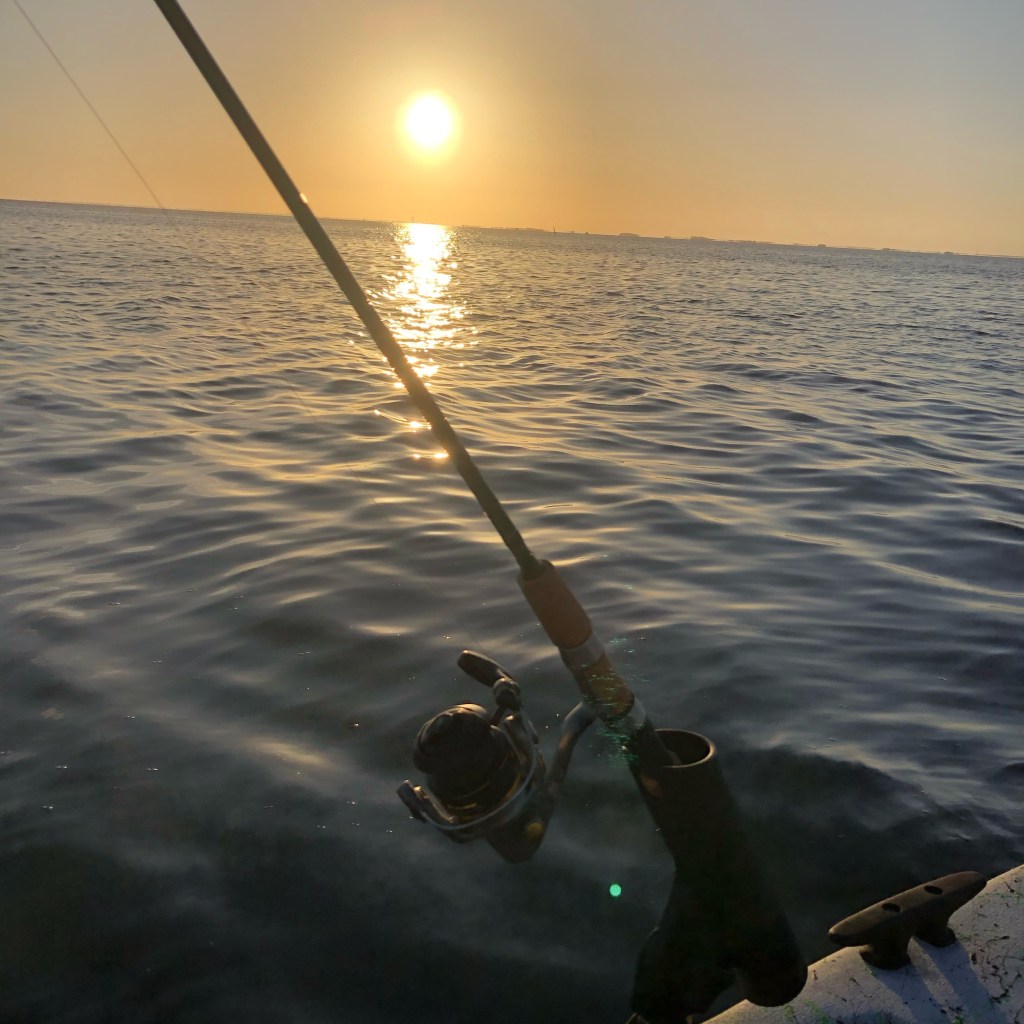
That’s it.
No poppin’, twitchin’, nudgin’, reelin’, hook settin’, dartin’, bumpin’, nothin’.
Because while we’re waiting on the boat watching the rods, the red fish are cruising the sand pockets nosing around for blue crab, sand eels, and any other bait that might catch their eye. And when that red fish bumps into a free meal of juicy, cut up mullet, they’re going to smack it when they’re good and ready.
Drag Racing
You’ll know the moment the red fish smacks the bait because that rod will bend completely in half with the drag screaming like an alarm bell. “Fish on! Fish on!”
This is when the real fight begins.
The red fish didn’t waste any time pulling drag as we raced to the front of the boat. Captain Jack coached me to keep the rod tip up, reel in the slack, and set the hook while he quickly reeled in the other line.
The fish didn’t give me a moment of mercy; as soon as I set the hook, he took off again with a mighty whip of his tail on the surface. I gritted my teeth in a ferocious smile; this was going to be a feisty one.
As soon as the drag stopped pulling, I started reeling with everything I had. With each of turn of the handle, I could feel the fish straining back against me. Though only a minute or so had passed, my arms burned in the effort just to keep reeling.
Suddenly the line went slack; the fish was swimming right at the boat! I reeled as hard and fast as I could, doing everything I could to keep tension on the line as he flew toward the boat at full speed. Just as he gave us a glimpse of fiery golden scales, he turned tail with a hiss of the drag back away from the boat.
And so we found a rhythm in our fight for a minute or so. He’d pull the drag, then I’d reel him in a little closer until he was suddenly right at the side of the boat. Captain Jack quickly caught him up in the net and brought him into the boat with a thick thunk.
The Five Year Fish
I knew with just a glance that this was easily one of the largest red fish I’d ever caught. A year ago, I had pulled in two 28 inchers within minutes of each other, right at the top of the legal slot in the state of Texas; anything larger than 28 inches has to be released or tagged by purchasing a tag. As the gentle morning sunlight glistened off his sides, I knew he’d be close.
We laid him out on the ruler and I couldn’t help my gasp.
28 and three quarter inches.
Somehow, it had finally happened. After five years of looking, hooking, and losing, I had finally caught an oversized red fish. After five years of watching friends and family catch oversized redfish, I had finally caught mine.
We took some quick pictures and then released him safely back into the water to grow even bigger.
But if I’ve learned anything from fishing with Captain Jack and my husband, Court, it’s that fishing for red fish is a game of patience. And with enough patience, you’ll find yourself in a fight against the laguna’s most notorious game fish.

 Jess and the Outdoors
Love the story Jess!! There’s nothing like your first over slot Red!
LikeLike
Thank you!! It was super exciting, and I can’t wait to catch more!
LikeLike